Chevy Bolt Battery Replacement Cost (2026): The Real Number
$9,000–$19,000 typical reviewed July 2026
A Chevy Bolt battery runs about $9,000 to $19,000 in 2026, but recall and warranty coverage means many owners pay nothing. Price yours before you panic.
Covers: Bolt EV, Bolt EUV
Price your Chevy Bolt battery pack and decide
Pick your pack, the path you're weighing, and what the car's worth today. The number and our take update as you go. No email, no quote form.
Estimated cost, this path
––
Most pay around – for this option.
Our take: …
Pick your options above and your recommendation appears here.
How this estimate is built
Pack plus labor, U.S. retail · reviewed July 2026. Your real quote varies by shop, region, and pack health.
Every way to buy it, compared
| Path | Typical cost | Longevity | Warranty | Main risk |
|---|---|---|---|---|
| Dealer / OEM new | $16,000–$19,000 | A decade-plus, like new | GM 8 yr / 100k mi on components | Sky-high vs the car's value |
| Independent, new pack | $12,000–$16,000 | A decade-plus | Shop warranty | Few shops stock Bolt packs |
| Refurbished pack | $9,000–$13,000 | Several years | 1–2 yr common | Limited Bolt pack supply |
Replace, refurbish, or sell the Chevy Bolt?
First, exhaust the recall and warranty, because most Bolt owners never pay for this. If you're genuinely out of coverage, the call is hard: a $16,000 retail pack on a used Bolt worth $12,000 to $18,000 is right on the line. On a clean, low-mile car a refurbished pack can make sense; on a high-mile one, selling as-is often wins. Run your numbers before you commit.
Worth fixing if you…
- Have confirmed the car is out of recall and warranty coverage
- Own a clean, low-mile Bolt still worth clearly more than a pack
- Can source a refurbished pack below new-OEM pricing
Lean toward selling if you…
- Haven't checked recall or warranty status yet (do that first)
- Have a high-mile Bolt worth near the cost of a new pack
- Were quoted dealer-new with no refurbished comparison
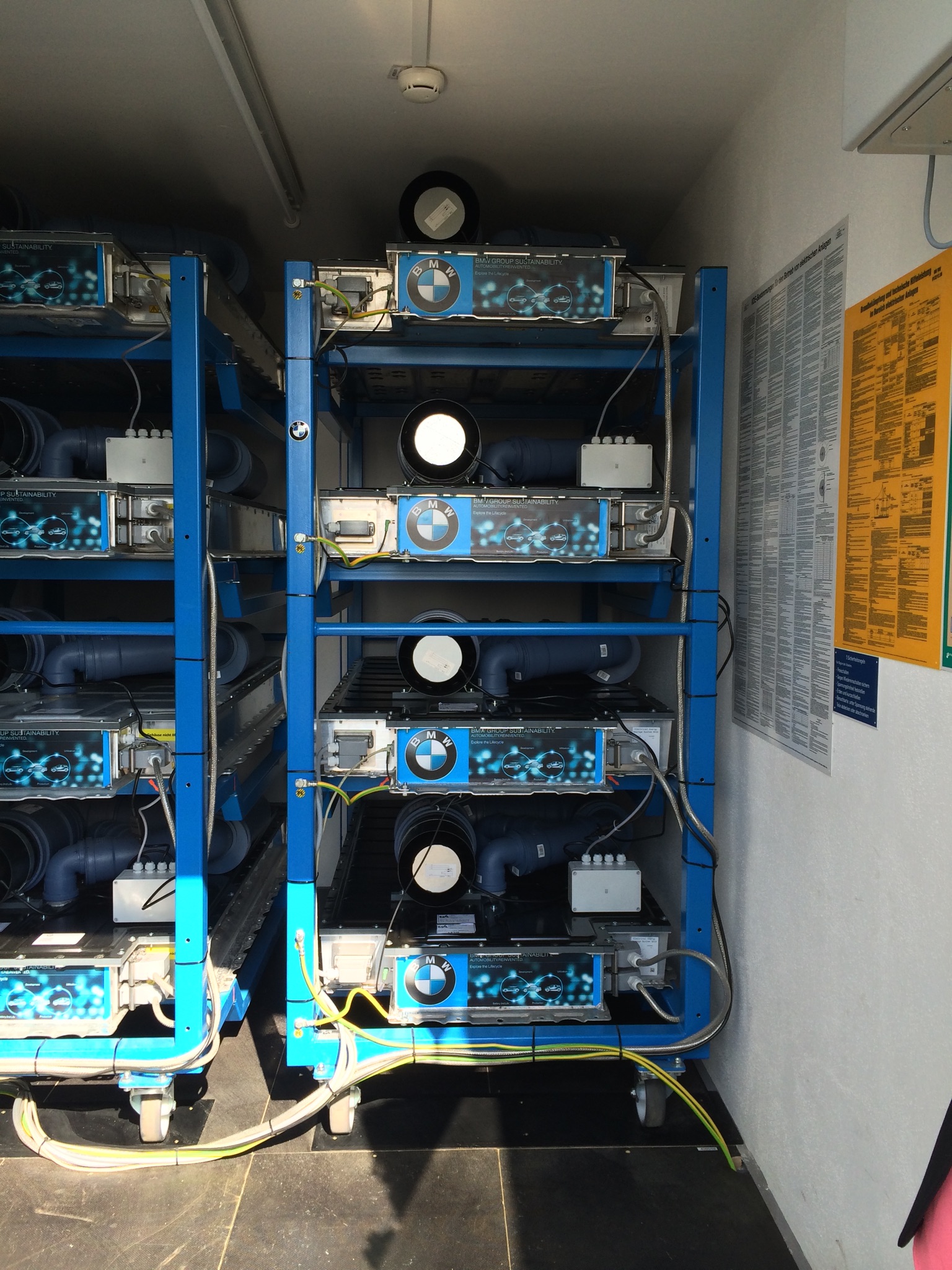
The most important thing to know about a Chevy Bolt battery is that you probably won’t pay for it. GM recalled the 2017 to 2021 cars over a fire risk and replaced the affected packs for free, often with new modules that restarted the warranty clock. On top of that, the Bolt’s high-voltage battery carries an 8-year, 100,000-mile warranty. Between those two, most Bolt owners facing a battery warning are looking at a covered repair, not a bill. Check recall and warranty status before you do anything else.
What actually caused the recall
The story is more specific than “fire risk.” GM’s supplier, LG Chem (now LG Energy Solution), had two separate manufacturing defects show up in a small number of cells: a torn anode tab and a folded separator. On their own, either defect is harmless. GM’s investigation found that in rare cases where both defects landed in the same cell, they could cause an internal short and, eventually, a fire, sometimes while parked and not charging. GM first issued a limited recall of 2017-2019 Bolts in 2020, expanded it through 2021, and by November 2021 had recalled every Bolt EV and Bolt EUV built from 2017 through 2022, the entire production run at that point. Owners paid nothing for the fix, and cars that got a new pack under the recall received a fresh “Bolt Battery Limited Part Warranty,” itself 8 years or 100,000 miles from the date the replacement pack went in, not from the car’s original in-service date. If your Bolt’s pack was swapped under the recall in, say, 2022, that fresh warranty clock can run well past what the car’s own age would suggest. Check your service history for a battery replacement date before assuming you’re out of coverage.
Warranty coverage without a hard capacity number
Unlike Tesla, Ford, and Rivian, GM has never published a simple across-the-board capacity percentage (Tesla and Ford both guarantee 70 percent retention over their warranty windows) for the Bolt specifically. GM’s Bolt coverage is defect-based: the 8-year, 100,000-mile Propulsion Battery Limited Warranty covers the pack against manufacturing defects and abnormal capacity loss, but doesn’t commit to a single published floor the way the newer Ultium-platform trucks and SUVs do. In practice, that means a genuinely failed cell or module is covered, but ordinary, gradual capacity fade within a range GM considers normal for the pack’s age and mileage generally isn’t a warranty event on its own. If you suspect real capacity loss, get a state-of-health reading rather than relying on a dealer’s ballpark assessment of whether it “seems normal.”
If you’re truly out of coverage, the retail number is steep. The pack alone runs around $16,000, and a dealer adds labor and related parts on top, which is how quotes reach $16,000 to $19,000. A new pack is the expensive path. The refurbished and used-pack market for the Bolt is still thin compared with a Prius or Leaf, but where you can find a tested pack, it can bring the cost down toward $9,000 to $13,000. The Bolt EV and the slightly larger EUV are close on price; which one you have matters far less than whether you’re in warranty.
That steep retail figure is exactly why the decision is genuinely hard for an out-of-coverage Bolt. A used Bolt is worth somewhere around $12,000 to $18,000, and a new pack can cost nearly that much, so you’re right on the line. Put your trim and path into the estimator and add the car’s value. On a clean, low-mile Bolt a refurbished pack can pencil out; on a high-mile one, selling as-is is often the smarter move. The estimator will show you which side you’re on, but the first step is always the same: confirm you don’t already have a free fix waiting.
One thing working in the Bolt’s favor: it’s liquid cooled
Compare the Bolt to a first-generation Nissan Leaf, and one design choice explains a lot of the difference in how each car ages. The Bolt uses an active liquid thermal management system to keep its pack in a stable temperature range, the same basic approach Tesla and most modern EVs use. The early Leaf relied on passive air cooling with no active thermal control at all, and it shows: fleet comparisons have measured roughly 4.2 percent annual degradation on air-cooled Leafs versus about 2.3 percent on liquid-cooled packs in similar service. The Bolt’s thermal management doesn’t erase the LG cell defect that triggered the recall, but it does mean a Bolt that’s dodged that issue (or already had its pack replaced) should age more gradually than an old Leaf under the same climate and charging habits. It’s also worth knowing GM is bringing the Bolt nameplate back for 2027 on a new LFP-based Ultium platform, a completely different battery from the one in every Bolt on the road today. That doesn’t change anything about your car, but it does mean the current-generation Bolt’s parts and pack ecosystem is a known, finite one rather than something GM will keep expanding.

What moves the price
| What changes the price | Effect on cost |
|---|---|
| Recall and warranty first | The single biggest factor. Most 2017–2021 Bolts had packs replaced free under GM's recall, and the 8-year battery warranty covers many others. Confirm before you pay anything. |
| Pack vs labor | The pack itself is most of the bill, roughly $16,000 at retail. Labor and related parts add a few thousand on top at a dealer. |
| New vs refurbished | A new GM pack is the most expensive. The remanufactured and used-pack market for the Bolt is still thin, but where it exists it can cut the cost meaningfully. |
| Bolt EV vs EUV | The EUV's slightly larger pack costs a touch more, but the two are close. Which trim matters far less than warranty status. |
Tools and further reading
As an Amazon Associate, BatteryJoule earns from qualifying purchases.
- OBDLink MX+ Bluetooth OBD2 adapter (affiliate), Read Bolt pack state of health with Torque Pro before paying for a capacity test